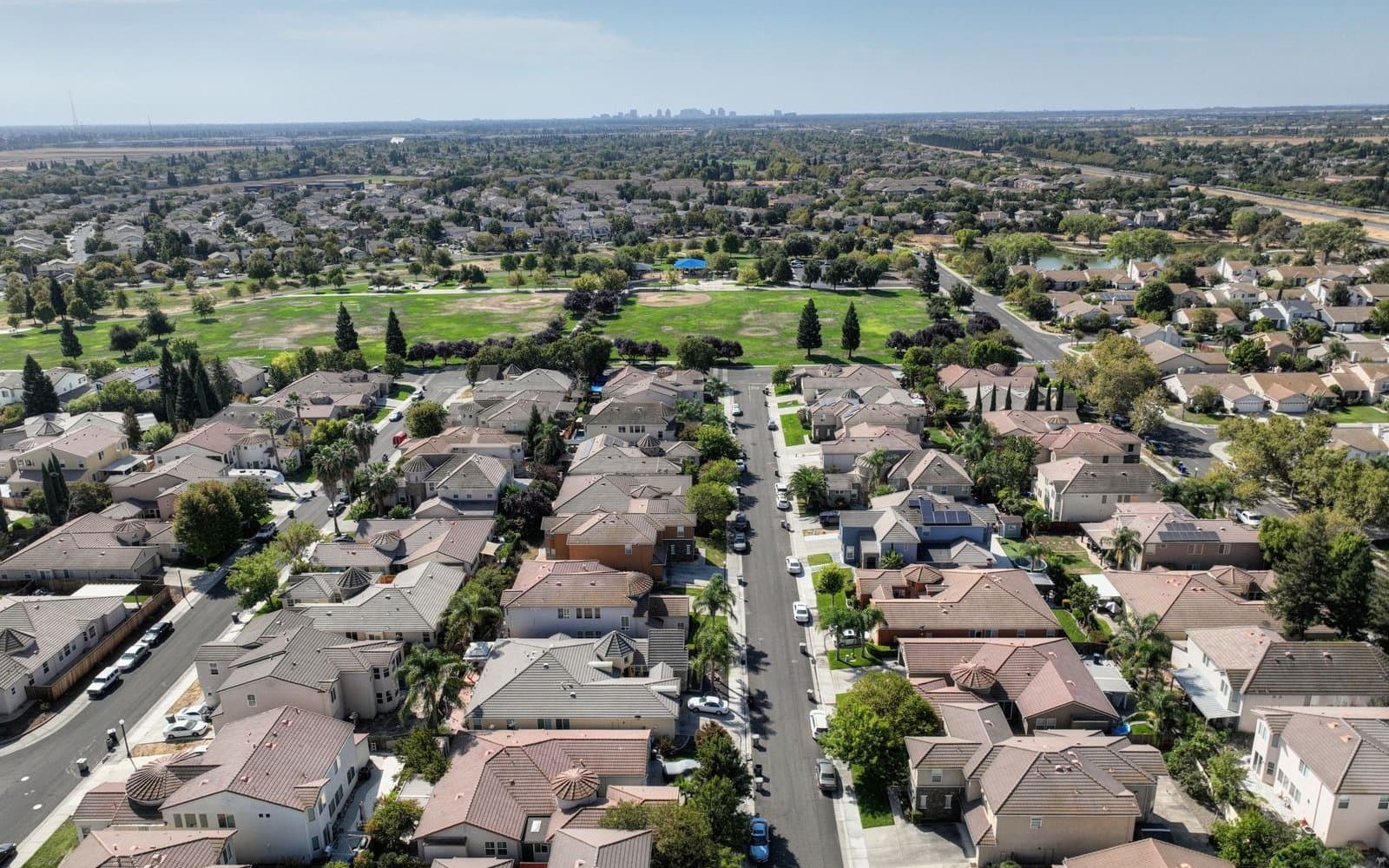
HVAC website design in Phoenix: built for 110-degree summers
What a Phoenix HVAC website needs: the ROC number where Arizona wants it, real same-day wording, rental cooling rules, APS and SRP rebates, and Valley towns.
16 min readTradeShopKit
- websites
- hvac
- phoenix
- local search
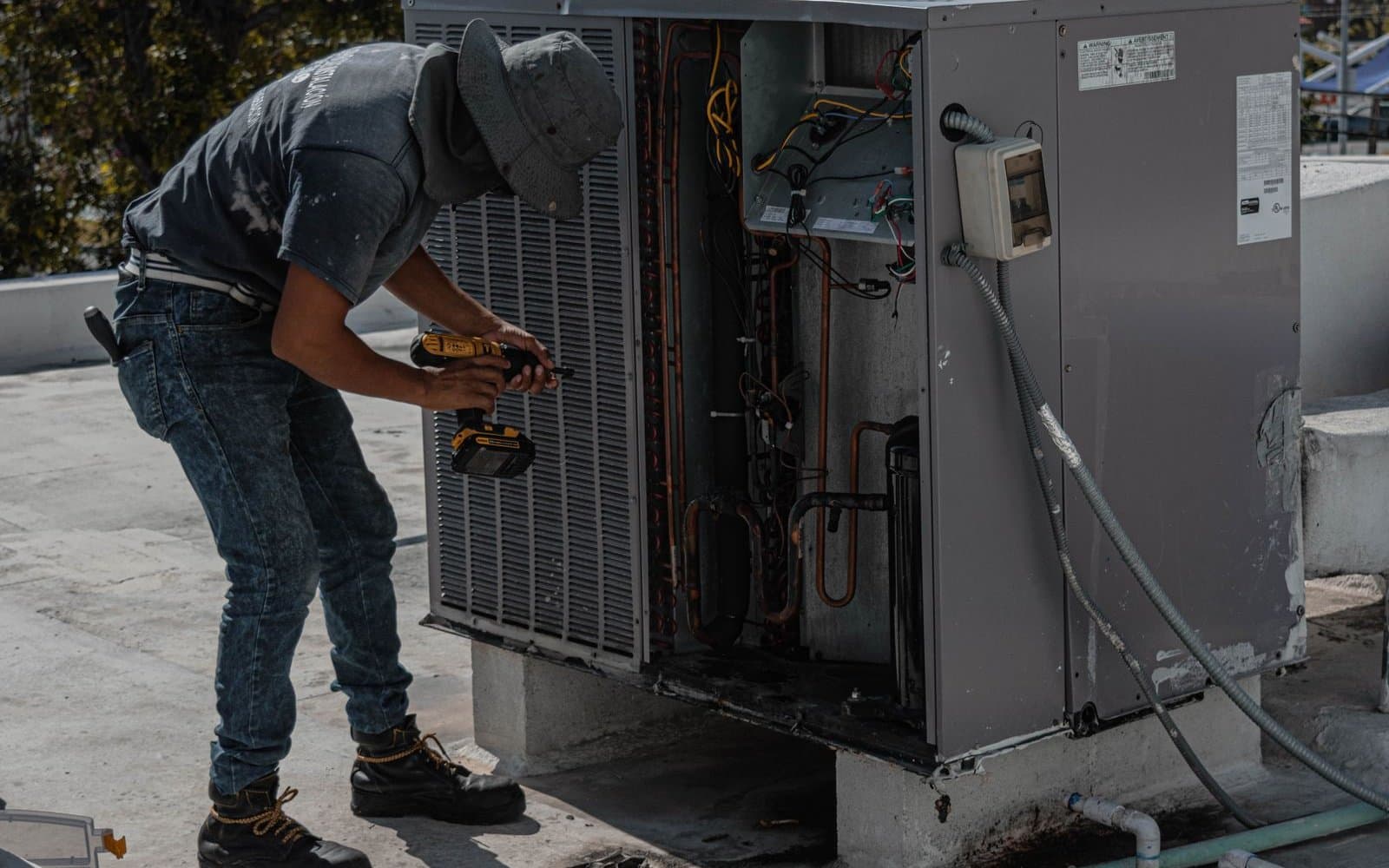
A Phoenix HVAC website has one job that matters more here than almost anywhere: telling a person with a dead AC in July, in a few seconds, whether you can get there today. Put a tap-to-call number, honest same-day wording, the Valley cities you cover and your ROC license number on the first phone screen. Then build the pages that are specific to Phoenix: rental AC calls (the city has a cooling ordinance), APS and SRP rebate work, evaporative coolers if you still touch them, and the permit question.
The general HVAC basics (repair vs replacement pages, refrigerant and SEER2 answers, financing wording) are in our HVAC website design guide. This post is about what changes when the site is for Phoenix and the rest of the Valley.
Phoenix heat changes what the site is for
In most cities a broken AC is a bad day. In Phoenix it can be a medical problem by mid-afternoon.
According to the National Weather Service in Phoenix, in 2024 the city hit 110 degrees or hotter on 70 days, the most in a year since records began in 1896. The same summer ran 113 days in a row at 100 or above, from May 27 to September 16. The longest run of 110-plus days is 31, set in July 2023.
Maricopa County's 2025 heat deaths report counted 430 heat-related deaths. Of the 111 that happened indoors, an air conditioner was present in 94% of cases, and where one was present it wasn't working in 72% of them. Don't put those numbers on your site to scare people into a replacement. They explain the calls you get: many August callers aren't shopping, they're hot and maybe calling for a parent who lives alone.
So the site has to work like a dispatcher, not a brochure. On a phone, before any scrolling, someone should see:
- A tap-to-call number (a real
tel:link) in the header of every page - What you can actually do today: "Same-day AC repair in Phoenix, Glendale and Peoria, 7 days a week in summer"
- Your hours in summer, if they're different from the rest of the year
- Your company name and ROC license number
If you triage calls, say how. Something like "If someone in the home is elderly, sick or has a baby, tell us when you call and we'll move you up the list" is kind and practical, as long as dispatch really does it. If you can't promise that, don't write it.
And if the phone goes to voicemail after 6 pm in July, take "24/7" off the site.
Put the ROC number on the home page, not the footer
Arizona contractors are licensed by the Registrar of Contractors (ROC). For HVAC work, the residential classification is R-39 (air conditioning and refrigeration, including solar), which covers comfort cooling, refrigeration, evaporative cooling, ventilating and heating. The commercial version is C-39, and the dual license that covers both is CR-39. Use whichever you actually hold, written exactly the way it reads on the license.
The website matters for your ads too. Under Arizona's advertising statute (ARS 32-1124), internet, broadcast and billboard ads can leave the license number off if they include a web address that goes straight to a site that prominently shows your name and license number. The ROC's published guidance spells out "prominently":
| ROC guidance | What it means on your site |
|---|---|
| The URL in the ad links directly to your home page | Don't point ads at a coupon page and hope that counts |
| Name and license number appear directly on the home page | Not only on the about page |
| Clearly visible, not hidden behind photos or graphics | Not baked into a hero image or a sliding banner |
| In an appropriately sized font | Readable on a phone without zooming |
| Not in the footer | The header, next to the phone number, is the safe spot |
Something like "Your Company LLC, ROC #XXXXXX, CR-39" right beside the call button covers it. Our Arizona contractor website guide goes deeper on the rule and what still needs the number on paper (bids, contracts and estimates).
Not legal advice. Rules change, check with the Registrar of Contractors.
Rental AC calls need their own page
The city of Phoenix has 1,665,481 people, according to the Census Bureau's July 2025 estimate, and its owner-occupied rate for 2020 to 2024 was 57.3%. So roughly four in ten homes are rented, and plenty of your no-cool calls come from tenants, landlords and property managers, and they ask different questions.
Phoenix's cooling ordinance (summarized on the city's own flyer) says rental units with air conditioning have to be able to cool habitable rooms to 82 degrees or lower, or 86 degrees or lower if they're cooled by an evaporative cooler. The temperature is measured three feet above the floor in the center of the room. The cooling has to be kept operational and in good repair.
State law adds another layer. Under ARS 33-1364, if a landlord deliberately or negligently fails to supply air conditioning that's installed, and the tenant has given notice, the tenant has remedies. Those include getting the service themselves and deducting the actual cost from rent, or staying somewhere else and not paying rent for that time.
You're not the tenant's lawyer. A "Rental and property manager AC repair" page just answers the practical questions:
- Who you bill: the tenant, the owner or the management company. Say whether you need owner approval before repairs above a certain amount.
- How fast you respond to rental calls in summer, and whether property managers get a priority line.
- Whether you can give the owner a written diagnosis and photos the same day (property managers forward it straight to the owner).
- Whether you service evaporative coolers, since the ordinance covers them too.
For landlords with a few doors, a maintenance agreement priced per unit is an easy sell. The HVAC maintenance plan generator lays out tiers and wording you can adapt for "one visit per unit before summer" plans.
Not legal advice. Check the current ordinance and statute before quoting them on your site.
Evaporative coolers: say yes or no, clearly
Phoenix still has evaporative coolers on roofs and in yards, and the city's rental rule has a separate number for them. If your company services them, give them their own page: pad changes, pump and float replacement, the spring start-up and the fall shutdown.
If you don't service them, say so in one line on the AC repair page ("We don't service evaporative coolers"). It saves you calls in May and saves them a wasted wait.
APS and SRP rebates: show you're in the program
APS and SRP both serve big parts of the Valley, and both run AC rebate programs that go through the contractor. If you're set up for them, that's a selling point.
From the utilities' own pages:
| APS AC Upgrade Rebate | SRP air conditioning rebate | |
|---|---|---|
| Who does the paperwork | Your participating contractor submits the rebate form for the customer | The contractor fills in the installer and equipment sections and signs; the customer applies, and the rebate can be released to the contractor if the customer agrees |
| Installation rules | Installed by a qualified contractor to the APS Quality Installation Standards | Load from ACCA Manual J or equivalent, capacity within 15% or half a ton of the estimate, airflow within 10% of the blower's rating, refrigerant charge within 5% of the manufacturer's spec |
| Efficiency | At least 14.3 SEER2 for the standard rebate | Check the current program terms |
What to put on the site:
- "We're a participating APS contractor" or "We install to SRP's rebate requirements" only if it's true today. Programs change and contractor lists get updated.
- A short line asking which utility the customer has, on the quote form. It changes the paperwork.
- A link to each utility's own rebate page, not a copied dollar amount. Rebate amounts change, and a stale "$1,000 back!" banner turns into an argument at the final invoice.
On the federal side, Arizona is in the Department of Energy's Southwest region, where a new split-system central AC under 45,000 Btu/h has to meet 14.3 SEER2 plus an EER2 minimum, based on installation date. EER2 is measured at a hotter test condition than SEER2, so it's worth a short paragraph on a replacement page in a place this hot.
Answer the permit question before they ask
"Do I need a permit to replace my AC?" comes up on almost every replacement quote. Inside Phoenix city limits, the Planning and Development Department's counter guideline for AC replacements (document TRT/DOC/00687) works as a list of yes or no questions. If any answer is yes, a permit is required. The questions include:
- Is the new unit going in a different location, or does it have a different footprint?
- Is it heavier than the old one (rooftop units can need a structural look)?
- Are there any duct changes, or duct penetrations that don't match?
- Does the new unit hold 10 pounds of refrigerant or more?
- Will it draw more amps or need new wiring?
- For gas units, is the burner bigger, and can the existing meter and piping handle it?
Mesa, Scottsdale, Chandler, Gilbert, Glendale and the other Valley cities run their own permit offices with their own rules. So the line on your site should be honest and short, for example:
"If your replacement needs a permit, we pull it and schedule the inspection, whether you're in Phoenix or another Valley city. Any permit fee is shown on your quote."
Write the service area the way the Valley talks
Nobody here searches "HVAC greater Phoenix area." They search "AC repair Gilbert," "AC repair Ahwatukee," "heat pump replacement Surprise." Google's help page on local ranking says results depend mainly on relevance, distance and prominence, and in a metro this spread out, distance does a lot of the work.
So name the cities and neighborhoods you really go to, say where you stop, and give a rough response time if it changes by area. A few made-up examples:
| Based in | Service area wording that helps callers |
|---|---|
| West Valley (Goodyear) | "Goodyear, Avondale, Buckeye, Litchfield Park and Tolleson. Same-day in summer for calls before noon. Nothing east of 51st Avenue." |
| East Valley (Mesa) | "Mesa, Gilbert, Chandler, Queen Creek and San Tan Valley. Rental properties in Tempe by appointment." |
| North Phoenix | "North Phoenix, Anthem, Cave Creek, Deer Valley and north Scottsdale. Nothing south of Camelback." |
Match it to the service area in your Google Business Profile. The Google Business Profile generator writes the profile description, and our Google Business Profile guide for contractors covers hiding a home address and setting the area correctly.
Plan the site around the Phoenix calendar
Most HVAC templates assume a real winter. Here, cooling is most of the year. Change the first screen and one banner as the year moves.
| When | What people are thinking | What the home page should push |
|---|---|---|
| February to April | "It's going to be 110 again soon" | Pre-summer AC tune-ups, maintenance plan sign-ups, replacements before the rush |
| May to September | "It's 95 inside and climbing" | Same-day repair, summer hours, triage line, members get priority |
| Monsoon (June 15 to September 30) | Storms, dust and power outages | A short line that you're taking storm calls, and a "check this first" list (breaker, thermostat, filter) |
| October to January | "Now's the time to fix it" | Replacement quotes, rebates, maintenance plans, the few heating calls |
Arizona's monsoon season officially runs June 15 to September 30. During a big storm week, a one-line banner like "Busy after the storms, expect a wait of a day or two in the West Valley" is honest and keeps people from calling three times.
The pre-summer tune-up push fills a lot of spring calendars. The seasonal tune-up campaign generator writes the banner, email and text copy so the site and your messages to past customers say the same thing in the same week.
Spanish on the site, if someone can answer in Spanish
The Census Bureau's 2020 to 2024 figures show 35.9% of Phoenix residents age 5 and up speak a language other than English at home, and 42.0% of residents are Hispanic or Latino. If someone on your team takes calls in Spanish, put "Hablamos español" next to the phone number and consider a Spanish version of your two or three busiest pages (AC repair, maintenance plan, contact). Only if it's true for whoever picks up in July, though.
Put some numbers on the site
Someone comparing three companies on a hot afternoon usually calls the one that shows a number first. Publish your diagnostic fee (and whether it's credited toward the repair), your summer after-hours fee if you charge one, and your maintenance plan price. For replacements, list what moves the price: tonnage, heat pump or AC with a gas furnace, rooftop package unit or split system, duct condition, electrical work, crane or roof access, and permits.
The pages a Phoenix HVAC site needs
The right-hand column is what changes for Phoenix.
| Page | Phoenix-specific detail to include |
|---|---|
| Home | Tap-to-call, ROC number beside it (not in the footer), same-day wording that's true, summer hours, Valley cities |
| AC repair | Triage line, what to check first after a storm, diagnostic fee, summer after-hours fee |
| AC replacement | Southwest SEER2 and EER2 minimums, rooftop vs ground units, permits, APS or SRP rebate paperwork |
| Rental and property manager AC | Who you bill, owner approvals, response times, written diagnosis with photos |
| Evaporative coolers | Only if you do them: pads, pumps, start-up and shutdown |
| Maintenance plan | Pre-summer visit, summer priority for members, price, landlord per-unit pricing |
| Service area | Valley cities and neighborhoods by name, where you stop, response time by area |
| About | Owner, ROC license and classification, EPA 608 certified techs, real crew and truck photos |
| Contact or quote | Short form with "which utility are you on?", languages you answer in, a reply time you can keep |
The service page copy generator drafts each of these from a few details about the service and your area. Then rewrite it the way you'd say it on a 112-degree roof. The FAQ generator gives you a starting set of questions per page (cut it down, first drafts run long).
Reviews that name the part of town
A review from someone in Laveen tells the next Laveen homeowner you already work there. Ask the same day, with a text like "Thanks for having us out to your place in Laveen today," and they'll often mention the neighborhood on their own. The review request generator writes those texts, and our post on how to get more Google reviews covers what Google allows. Summer is your busiest stretch, so it's when to ask.
Phoenix HVAC website checklist
Open your site on your phone and go through it.
Licensing
- Company name and ROC license number on the home page, near the phone number, not in the footer
- License classification (R-39, C-39 or CR-39) written as it appears on the license
- Ads that skip the license number link straight to the home page
- License number on every bid, contract and estimate
Summer readiness
- Tap-to-call number in the header of every page
- Same-day wording that dispatch can actually deliver
- Summer hours and after-hours fee stated
- A triage line, only if you really move vulnerable callers up
- No "24/7" unless someone answers at night
Phoenix pages
- Rental and property manager AC page
- Evaporative cooler page, or a clear "we don't service them"
- Replacement page with Southwest SEER2 and EER2 minimums and the permit answer
- APS or SRP participation stated only if current, with links to the utility's own page
- No copied rebate dollar amounts
Local search
- Valley cities and neighborhoods named, plus where you stop
- Service area matches your Google Business Profile
- Seasonal banner changed for pre-summer, summer, monsoon and fall
Trust
- Recent reviews with first names and neighborhoods
- Real photos of your crew, trucks and roofs
- "Hablamos español" only if true for whoever answers
Rather not build it yourself? The Trade Website Bundle is a five-page site written for your HVAC business, with click-to-call on every page, a quote request form, Google Business Profile setup, and Google Analytics and Search Console connected. It includes domain and hosting for the first year, goes live within 10 days or your money back, and costs $399 one-time (it was $500), with nothing monthly required. After year one, domain and hosting renew at the provider's price. More tools for heating and cooling companies are on the HVAC hub.
Quick answers
Does a Phoenix HVAC company need its ROC number on its website?
It's the smart move. Under ARS 32-1124, internet, broadcast and billboard ads can leave the license number off only if they link straight to a website that prominently shows the contractor's name and license number, and the ROC says that means on the home page, clearly visible and not in the footer.
What should a Phoenix HVAC website include?
A tap-to-call number, the ROC license number, honest same-day wording, the Valley cities you serve, separate repair and replacement pages, a rental AC page, rebate and permit answers, real photos and recent reviews.
What temperature does a Phoenix landlord's AC have to reach?
Phoenix's cooling ordinance requires rental units to cool habitable rooms to 82 degrees or lower with air conditioning, or 86 degrees or lower with an evaporative cooler, measured three feet above the floor in the center of the room.
Do you need a permit to replace an AC unit in Phoenix?
It depends on the job. The city's guideline requires a permit if the unit moves, gets heavier, changes ductwork, holds 10 pounds or more of refrigerant, draws more power or needs more gas, among other things. Other Valley cities have their own rules.
What efficiency does a new AC need in Arizona?
Arizona is in the Department of Energy's Southwest region. A new split-system central AC under 45,000 Btu/h has to meet 14.3 SEER2 plus an EER2 minimum, based on the installation date.
Start with the first screen
Pull up your home page on your phone and pretend your own AC died at 3 pm in July. Can you see the number, whether they'll come today, and the ROC license number without scrolling? Fix that first. Then write the rental AC page before the next property manager calls asking who pays.