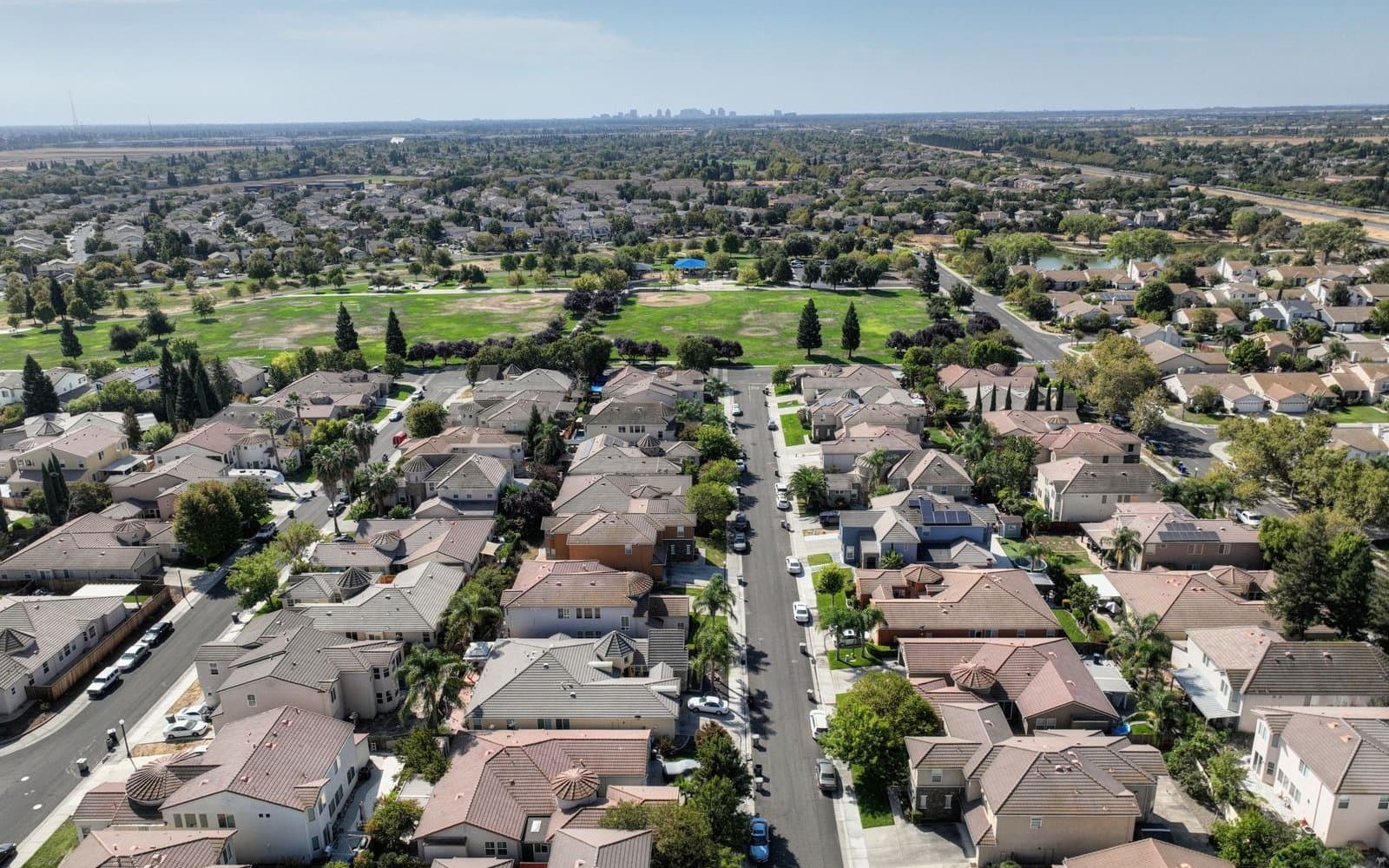
HVAC website design in Atlanta: a site for both seasons
What an Atlanta HVAC website needs: your Georgia license where people can find it, heating and cooling pages, Georgia Power rebates and ITP/OTP areas.
16 min readTradeShopKit
- websites
- hvac
- atlanta
- local search
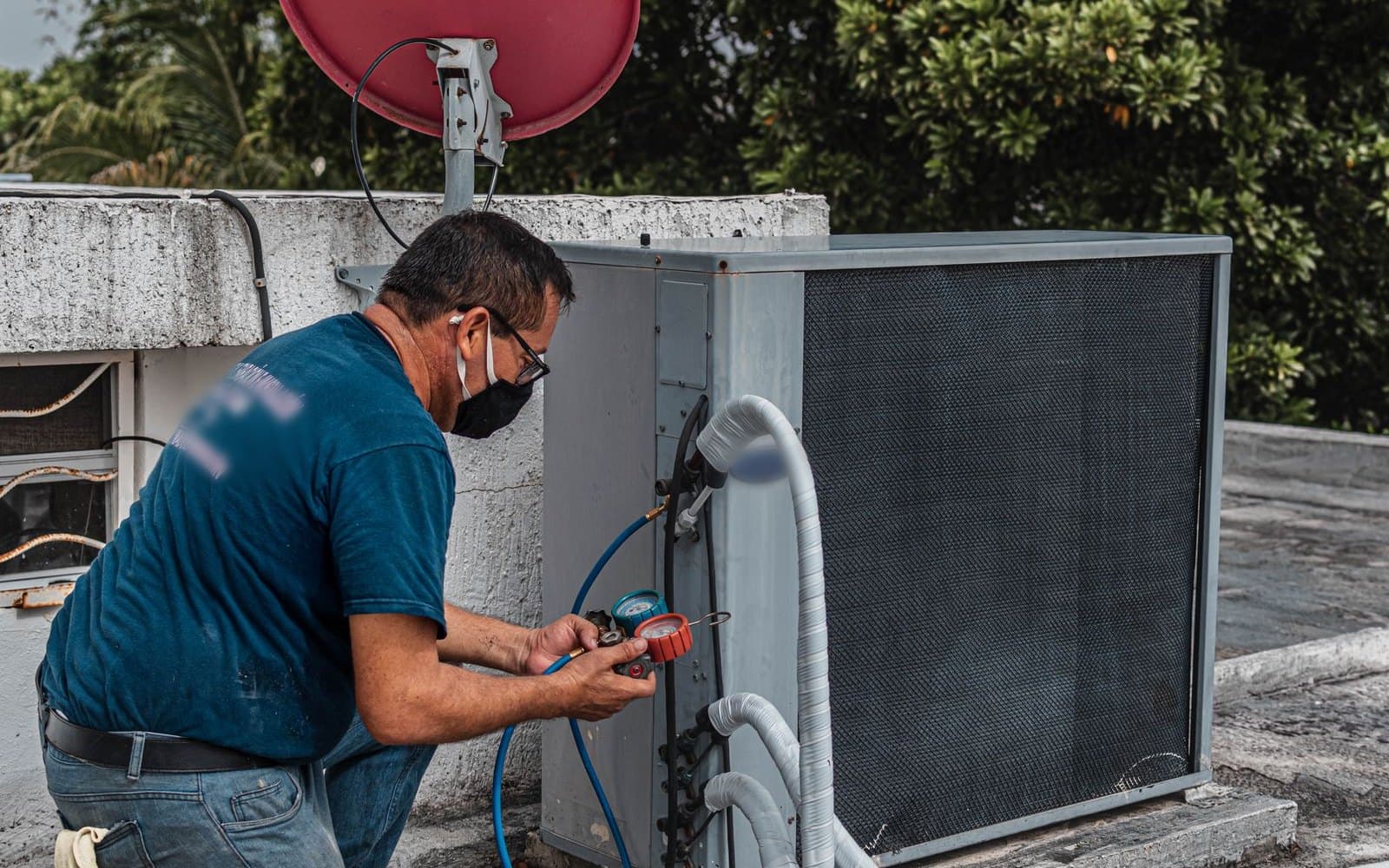
An Atlanta HVAC website has to sell two businesses at once: summer AC repair and winter heat, in a metro where people describe their location by which side of I-285 they live on. On the first phone screen, put a tap-to-call number, your Georgia conditioned air license number, the counties or towns you cover, and whether you can come today. Then build the pages that are particular to Atlanta: heat pumps and gas furnaces as separate services, the Georgia Power rebate work you do, a renter and landlord page, and an honest answer on permits.
The general HVAC basics (repair vs replacement pages, refrigerant questions, financing wording) are in our HVAC website design guide. This one is about Atlanta and the counties around it.
Atlanta is a heating market too
A lot of HVAC templates are written for one season. That works in Phoenix. It doesn't work here.
The National Weather Service office for Atlanta and Peachtree City describes north Georgia (outside the mountains) as getting roughly 30 to 60 days a year at 90 degrees or hotter, and also 50 to 70 days at or below freezing. Snow is usually an inch or two a year, on a day or two. So your phones ring in July for no-cool calls and again in January when a heat pump is running on emergency heat and the power bill shows up.
That changes the home page. Instead of one hero line about AC, give both seasons a place:
- A tap-to-call number (a real
tel:link) in the header of every page - One line that covers both: "Same-day AC and heating repair in Decatur, Tucker and Stone Mountain"
- A seasonal banner that you actually change in October and again in April
- Your company name and Georgia license number
And if nobody answers after 8 pm in a January cold snap, don't write "24/7" anywhere.
Your license number, and why the website is where it lives
In Georgia, HVAC contracting is licensed through the Division of Conditioned Air Contractors, under the State Construction Industry Licensing Board at the Secretary of State's office. There are two classes. Class I (restricted) covers systems up to 175,000 BTU of heating and 60,000 BTU of cooling. Class II is unrestricted. Write whichever you hold, the way it reads on the license.
Georgia rewrote its contractor licensing law (Title 43, Chapter 14), and the new version took effect July 1, 2026. A few parts of it matter for your website and your trucks, based on the text as signed:
| What the law says | What to do |
|---|---|
| Advertising as a conditioned air contractor without the license is evidence of a violation, and "advertising" includes the internet, social media, apps, directory listings, mailers, business cards and vehicle signs | If the license is in a partner's or a qualifier's name, make sure the business on the website is the one that's actually covered |
| Commercial vehicles need the company's registration or certificate number from the Secretary of State, or a website where that number can be found | If your trucks show a web address instead of the number, the number has to be easy to find on that site. Put it in the header or right beside the phone number, not in tiny print in the footer |
| The same number (or that website) has to appear prominently in directory and newspaper ads | Same fix. One page, one clear number |
| The number goes on invoices and proposal forms | Check your quote template and invoice template, not only the site |
The penalties got bigger in the rewrite too, with civil penalties from the board of up to $10,000 per violation. The usual trap is old van lettering that points to a website where the license number is buried.
Homeowners can look up a license on the Secretary of State's license search, and some do before they let anyone into the attic. A short line like "Georgia Conditioned Air Contractor, Class II, License #XXXXXX. Look us up on the Secretary of State's site" makes that easy.
Not legal advice. Rules change, check with the Secretary of State's licensing board.
Heat pumps and gas furnaces get separate pages
Metro Atlanta has plenty of both, and the customers ask different things. A heat pump owner wants to know why the house feels lukewarm at 25 degrees and why the "EM heat" light is on. A gas furnace owner wants to know whether you'll check the heat exchanger and whether that smell is normal.
One "Heating repair" page that tries to answer both reads like a parts catalog. Two pages work better:
- Heat pump repair and replacement: defrost problems, emergency heat, aux heat running all day, replacement options, and what a new one costs to run
- Furnace repair and replacement: no-heat calls, pilot and ignitor problems, carbon monoxide safety, filters, and when replacement makes more sense than repair
On the furnace page, add one safety line that's specific to Georgia. In Atlanta Gas Light's service area, AGL delivers the gas while customers buy it from a marketer they picked. The Georgia Public Service Commission says gas leaks go to Atlanta Gas Light, which answers around the clock, at 770-907-4231 in metro Atlanta. So the line is simple: "If you smell gas, leave the house and call Atlanta Gas Light at 770-907-4231 before you call us." People get confused because their bill comes from someone else.
Federal tax credit banners need to come down
This one is easy to miss. According to the IRS, the Energy Efficient Home Improvement Credit covers qualifying property placed in service from January 1, 2023 through December 31, 2025. If your heat pump page still says "Get 30% back with the federal tax credit," it's out of date for anything installed in 2026, and a customer who believed it is going to call you in April angry.
Search your site for "tax credit," "25C" and "30%." Delete what's stale, and don't replace it with a guess about future credits.
Georgia Power rebates: show it if you do the paperwork
Georgia Power's Home Energy Improvement Program runs from August 1, 2026 through December 31, 2028, according to its 2026 requirements document. Rebates are generally 50% of the cost up to a cap per item, with a limit of $2,500 per customer per year. A few that touch HVAC companies directly:
| Measure | Cap per the program document | Who can do it |
|---|---|---|
| Heat pump or electric furnace tune-up | Up to $75, one per system per year, done to the program checklist | Licensed HVAC installer |
| Replacing an electric furnace with an air source heat pump | Up to $1,500 | Licensed HVAC installer, with a note confirming the replacement |
| Smart thermostat (ENERGY STAR, ducted systems) | Up to $150 | Can be self-installed |
| Duct repair and sealing | Up to $600 (electric) or $500 (gas), with testing requirements | Program installer or other licensed pro |
The customer applies online within 60 days of the work, and Georgia Power can change or end the program at any time. So on your site:
- Say "We do Georgia Power tune-ups to the program checklist" only if your techs really fill out that checklist.
- Ask "Are you a Georgia Power customer?" on the quote form. Some homes in the metro buy power from an EMC instead, and those programs are different.
- Link to Georgia Power's rebate page instead of copying the dollar amounts. A stale "$1,500 back!" banner is how a friendly install turns into an argument at the final invoice.
The $75 tune-up rebate pairs well with a maintenance plan. The HVAC maintenance plan generator lays out plan tiers and wording, and you can mention the rebate as something the customer may be able to claim on top.
Efficiency minimums for a replacement page
Georgia is in the Department of Energy's Southeast region. For a split-system central air conditioner installed on or after January 1, 2023, the regional minimum is 14.3 SEER2, and compliance is judged by the installation date. One short paragraph on the replacement page answers "Can you just put back the same unit I had?" (sometimes no).
A rental and landlord page, because most of the city rents
Census figures for 2020 to 2024 put the owner-occupied rate in the city of Atlanta at 46.4%. More than half of homes in the city are rented. Out in Gwinnett or Cherokee the mix is different, but if you work intown, a lot of your no-cool calls come from tenants and property managers.
A "Rental property and property manager HVAC" page answers the practical stuff:
- Who you bill (tenant, owner or management company) and whether you need owner approval above a set amount
- How fast you respond to rental calls in July and in January
- Whether you send the owner a written diagnosis with photos the same day
- Whether you offer per-unit maintenance pricing for landlords with a few doors
You're not the tenant's lawyer, so skip the landlord law.
Answer the permit question before they ask
"Do I need a permit for this?" comes up on almost every replacement. Inside the city of Atlanta, the Office of Buildings publishes a handout of work that's exempt from permits on existing one- and two-family homes. On the HVAC side it lists repair or replacement of existing AC condensers, repair of existing furnaces and equipment, and replacing grills and diffusers on existing ductwork. Exempt work still has to meet code.
Notice what isn't on that list, like a whole new system, a furnace replacement or new ductwork. For those, ask the city's Electrical, Plumbing and HVAC permits line (404-865-8550) instead of guessing. And Atlanta is only one of many permit offices you'll deal with. Cobb, Gwinnett, DeKalb and their cities each have their own.
A line on your replacement page might read:
"If your job needs a permit, we pull it and book the inspection, whether you're in the city of Atlanta, Cobb, Gwinnett or DeKalb. Any permit fee is on your quote."
Write the service area the way Atlanta talks
People here say "inside the Perimeter" and "OTP." They search "AC repair Marietta," "furnace repair Decatur," "heat pump replacement Alpharetta." Google's help page says local results depend mainly on relevance, distance and prominence. In a metro this spread out, where a short drive on the map can eat a whole morning, distance matters a lot, for Google and for the customer.
So name the towns and neighborhoods you really serve, say where you stop, and give a realistic response time. A few made-up examples:
| Based in | Service area wording that helps callers |
|---|---|
| Marietta (Cobb) | "Marietta, Kennesaw, Smyrna, Acworth and Powder Springs. Same-day for calls before 11 am. We don't go inside the Perimeter." |
| Decatur (DeKalb) | "Decatur, Kirkwood, East Lake, Tucker and Avondale Estates. Intown Atlanta by appointment." |
| Lawrenceville (Gwinnett) | "Lawrenceville, Snellville, Duluth, Buford and Dacula. Nothing south of I-20." |
Match it to the service area on your Google Business Profile. The Google Business Profile generator writes the profile description, and our Google Business Profile guide for contractors covers setting the area and hiding a home address.
Plan the site around the Atlanta calendar
Atlanta has a real spring, and spring here is yellow. Atlanta Allergy and Asthma's reports show tree pollen taking over from late February well into May, and in the bad 2021 season they reported many days above 1,000 on their count.
| When | What people are thinking | What the home page should push |
|---|---|---|
| March to May | "Everything is yellow and the AC smells musty" | AC tune-ups, filter changes, maintenance plan sign-ups, indoor air quality if you really do it |
| June to September | "It's 80 inside and the unit won't stop running" | Same-day AC repair, summer hours, members get priority |
| October to November | "We should check the heat before it gets cold" | Heating tune-ups, furnace safety checks, replacement quotes |
| December to February | "The heat pump is blowing cold air" | Same-day heating repair, emergency heat explained, cold-snap hours |
The seasonal tune-up campaign generator writes the banner, email and text copy so the site and your messages to past customers say the same thing the same week. For the bigger picture beyond the website, our post on how to market an HVAC business covers it.
Put some numbers on the site
Somebody comparing three companies from their phone at work tends to call the one that shows a price. Publish your diagnostic fee and whether it comes off the repair, your after-hours fee, and your maintenance plan price. For replacements, list what moves the price: tonnage, heat pump or AC with a gas furnace, attic or crawlspace air handler, duct condition, electrical work, and permits.
The pages an Atlanta HVAC site needs
The right-hand column is what changes for Atlanta.
| Page | Atlanta-specific detail to include |
|---|---|
| Home | Tap-to-call, Georgia license number beside it, both seasons in the first screen, towns or counties served |
| AC repair | Same-day wording you can keep, summer hours, what to check first |
| Heat pump repair and replacement | Emergency and aux heat explained, cold-snap hours, Georgia Power heat pump conversion if you do it |
| Furnace repair and replacement | Gas leak line pointing to Atlanta Gas Light, CO safety, heat exchanger checks |
| Replacement | Southeast SEER2 minimum, permits by jurisdiction, no stale federal tax credit claims |
| Rental and property manager | Who you bill, owner approvals, response times, written diagnosis with photos |
| Maintenance plan | Spring and fall visits, Georgia Power tune-up rebate if you follow the checklist, price |
| Service area | ITP and OTP towns by name, where you stop, response times |
| About | Owner, license class and number, EPA 608 certified techs, real crew and truck photos |
| Contact or quote | Short form with "Which power company are you on?", a reply time you can keep |
The service page copy generator drafts each page from a few details about the service and your area. Then rewrite it the way you'd explain it standing in the customer's hallway with the filter in your hand. The FAQ generator gives you a starting set of questions per page (cut it down hard, first drafts run long).
Reviews that name the neighborhood
A review from someone in Smyrna tells the next Smyrna homeowner you already work there. Ask the same day, and mention the place in the text ("Thanks for having us out in Smyrna today"), and people often repeat it in their review. The review request generator writes those texts, and our post on how to get more Google reviews covers what Google allows. Your busiest weeks, the first real heat wave and the first hard freeze, are when to ask.
Atlanta HVAC website checklist
Open your site on your phone and go through it.
Licensing
- Company name and Georgia conditioned air license number easy to find, near the phone number
- License class (Class I or Class II) written as it appears on the license
- If your trucks show a web address instead of the number, the number is on that site and easy to find
- Number on every invoice and proposal template
Two seasons
- Tap-to-call number in the header of every page
- Both AC and heating in the first screen
- Separate heat pump and furnace pages
- Gas leak line pointing to Atlanta Gas Light on the furnace page
- Seasonal banner changed in spring and fall
- No "24/7" unless someone answers at night
Money and rules
- No stale federal tax credit claims
- Georgia Power rebate work mentioned only if you do it, with a link to their page instead of copied amounts
- "Which power company are you on?" on the quote form
- Permit answer that covers each county you work in
- Diagnostic fee, after-hours fee and plan price published
Local search
- Towns and neighborhoods named, plus where you stop
- Service area matches your Google Business Profile
- Rental and property manager page if you work intown
Trust
- Recent reviews with first names and neighborhoods
- Real photos of your crew, trucks and jobs
Rather not build it yourself? The Trade Website Bundle is a five-page site written for your HVAC business, with click-to-call on every page, a quote request form, Google Business Profile setup, and Google Analytics and Search Console connected. It includes domain and hosting for the first year, goes live within 10 days or your money back, and costs $399 one-time (it was $500), with nothing monthly required. After year one, domain and hosting renew at the provider's price. More tools for heating and cooling companies are on the HVAC hub.
Quick answers
What license does an HVAC contractor need in Georgia?
A conditioned air contractor license from the Division of Conditioned Air Contractors at the Georgia Secretary of State. Class I is restricted to systems up to 175,000 BTU of heating and 60,000 BTU of cooling, and Class II is unrestricted.
Does an Atlanta HVAC company need its license number on its website?
If your trucks show a website instead of the number, Georgia's law expects that number to be findable on the site. Either way, putting it near your phone number is the simplest way to stay covered and lets homeowners check you on the Secretary of State's license search.
Can I still advertise the federal tax credit on heat pumps?
Not for 2026 installs. The IRS says the Energy Efficient Home Improvement Credit covers property placed in service from January 1, 2023 through December 31, 2025, so take old "30% back" banners down.
Do you need a permit to replace an AC unit in Atlanta?
Inside the city, the Office of Buildings lists repair or replacement of an existing AC condenser on a one- or two-family home as exempt, though the work still has to meet code. Bigger jobs and work in other counties can be different, so check with that jurisdiction.
Start with the truck
Walk out to your van and read what's on the door. If it's a web address, pull that site up on your phone and time how long it takes to find your license number. If it takes more than a few seconds, fix that today. Then write the furnace page before the first cold morning, because that's when the calls start.