How to market an HVAC business around the seasons
How to market an HVAC business: plan by season, fill spring and fall with tune-ups, sell maintenance plans, fix your Google profile, then test paid leads.
14 min readTradeShopKit
- marketing
- hvac
- leads
- local search
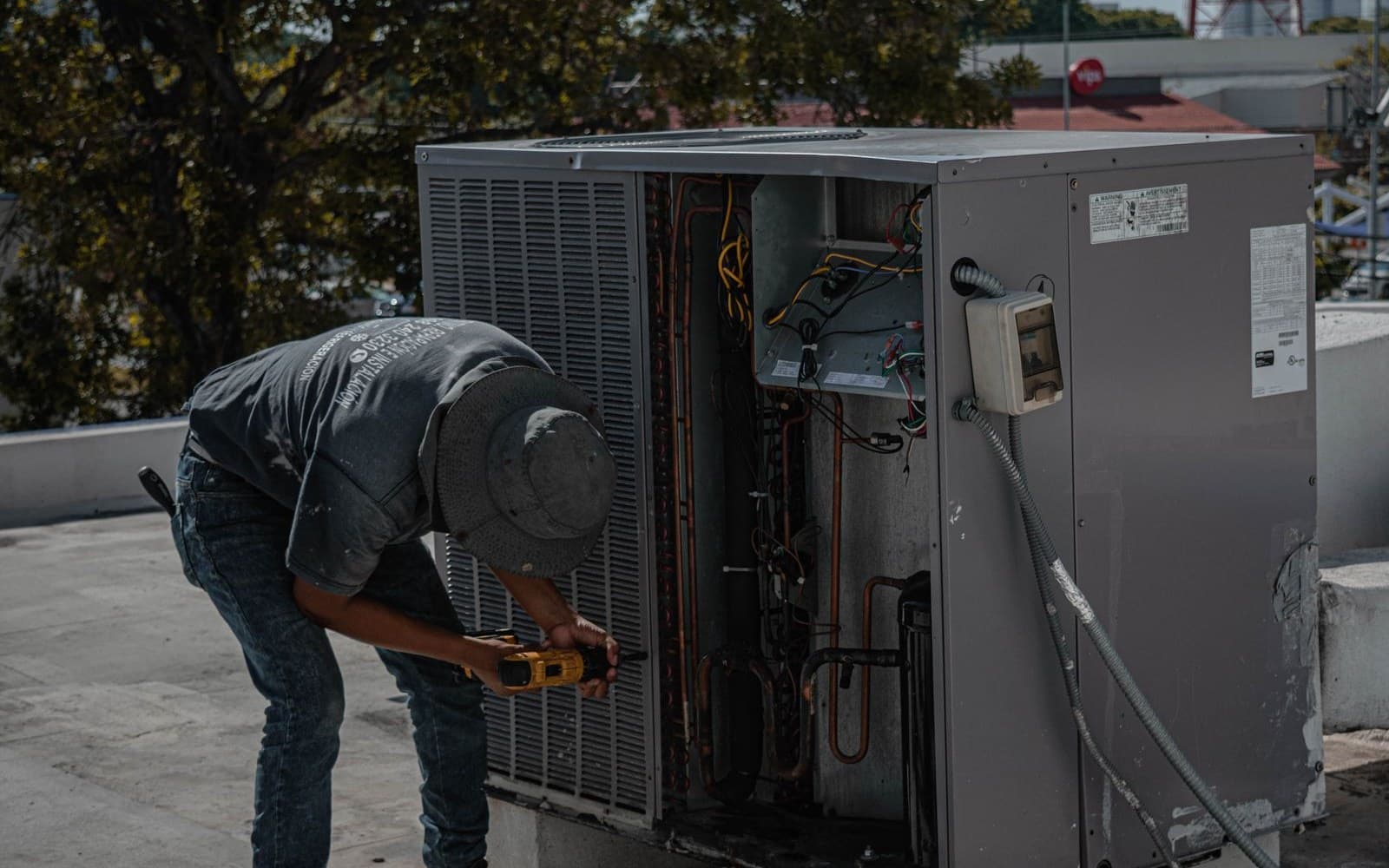
To market an HVAC business, plan around the calendar. Use spring and fall to sell tune-ups and maintenance plans to people who already know you, keep your Google Business Profile and reviews in shape all year, and save paid leads for the weeks when you have open slots to fill. Most HVAC shops do the reverse: they spend in July, when the phone is already ringing, and go quiet in October.
This post walks through that plan month by month, with the numbers to check before you spend anything.
HVAC marketing has a different problem than other trades
A plumber's phone rings about the same in March as in September. Yours doesn't. On the first 95 degree day you could book every tech twice, and six weeks later the schedule has holes in it.
So the question for an HVAC owner is rarely "how do I get more calls?" It's "how do I get calls in April and October, and how do I get the right calls in July?"
That splits your marketing into three jobs:
| Job | When | What you're selling | Who you're talking to |
|---|---|---|---|
| Fill the slow months | Spring and fall | Tune-ups, maintenance plans, duct and air quality work | Past customers first |
| Catch the emergencies | Peak summer and winter | Fast repair, same-day or next-day | Strangers searching on a phone |
| Win replacements | All year, decided in days | A new system, often with financing | A homeowner comparing two or three quotes |
Each one needs a different message. A postcard about a spring tune-up does nothing for the family whose upstairs is 84 degrees tonight, and a "24/7 emergency service" banner does nothing for the person calmly pricing a heat pump in May.
Sell the tune-up before the season, the way ENERGY STAR tells homeowners to
You don't have to invent the reason for a shoulder-season visit. ENERGY STAR's maintenance checklist already gives it to homeowners: have the cooling system checked in spring and the heating system in fall, because contractors get busy once summer and winter arrive. It even suggests tying the two visits to the daylight saving time changes so people remember.
That's your campaign calendar, written by a government program. Use it.
Send the cooling tune-up message when the clocks change in March and the heating one when they change back in November. (In the hottest and coldest markets, go two or three weeks earlier.) Keep the message short and specific about what the tech does. ENERGY STAR's list of what a typical check-up covers is a good, plain source for your wording:
- Check thermostat settings
- Tighten electrical connections and measure voltage and current on motors
- Lubricate moving parts
- Inspect the condensate drain
- Check the system controls for safe starting and shutdown
- For cooling: clean the evaporator and condenser coils, check the refrigerant level, clean and adjust the blower
- For heating: check gas or oil connections, gas pressure and the heat exchanger
List what your own tune-up includes, in those kinds of words, with one price. "21-point precision tune-up" means nothing to a homeowner. "We clean the outdoor coil, clear the drain line and test the capacitor" does.
The seasonal tune-up campaign generator writes the email, text and postcard versions so you're not starting from a blank page in the busiest week of your year.
One rule on texts and emails: only message people who gave you their number or address for that, and take anyone off the list the moment they ask.
Maintenance plans are your marketing, more than your ads are
Honestly, the best HVAC marketing isn't marketing at all. It's a list of households that have already agreed to see you twice a year.
Think about what a plan member gives you. Two booked visits in the slow months. A tech standing in front of a 14-year-old system with the homeowner right there. First call when it finally quits. And a customer who isn't typing "ac repair near me" into a phone and landing on someone else.
A simple plan is enough:
- Two visits a year (cooling in spring, heating in fall)
- Priority scheduling in peak season
- A set discount on repairs
- One price, billed monthly or yearly
Offer it at the end of every repair call, when the system is running again and the customer is relieved. Something like: "For about what you'd pay for two tune-ups, the plan covers both visits and moves you to the front of the line in July. Want me to set it up while I'm here?"
For example (made-up numbers, use your own): 300 plan members at two visits each is 600 booked calls a year, most of them in months when you'd otherwise be chasing work. If one visit in twenty turns into a replacement quote, that's 30 quotes you didn't pay a cent to get.
The maintenance plan generator drafts the plan terms and the wording for the offer. Put the plan on its own page on your website too, with the price on it.
Your Google Business Profile, tuned for HVAC
When the air goes out, people search on their phone and call one of the first three businesses on the map. That map listing is your Business Profile.
Google's help page on local ranking says results come down mainly to relevance, distance and prominence. Prominence includes how many reviews you have and your rating. The same page says there's no way to request or pay for a better local ranking, so skip anyone promising a guaranteed spot.
What Google says does help: verify the business, keep the information complete and current, respond to reviews, and add photos and videos.
For an HVAC company, "complete and current" has a seasonal twist that most owners miss:
- Update hours when you add evening or weekend coverage for peak season, and change them back after. Wrong hours in July cost you calls.
- List heating and cooling services separately (AC repair, AC installation, furnace repair, heat pump installation, ductless mini splits, duct cleaning if you do it). Relevance depends on Google knowing what you do.
- Swap your photos with the season. Condensers and attic air handlers in spring, furnaces and heat pumps in fall.
- Post your tune-up offer on the profile a few weeks before each season.
The Google Business Profile generator writes the description and service text. Our Google Business Profile guide for contractors covers setup, including what to do if you work from home.
Reviews: ask in the driveway, follow the FTC rule
The best moment to ask for a review is right after cold air starts coming out of the vents again. The customer is happy and you're still there. Send the link by text before you pull away.
The review request generator writes the message. Aim for a steady trickle all year, since a burst of 30 reviews in August and nothing until next summer looks odd and wastes the slow months.
Two things to know about the FTC's Consumer Reviews and Testimonials Rule, which took effect October 21, 2024:
- You can't offer a discount, gift card or anything else in exchange for a review that has to be positive. The FTC's own Q&A says incentives can't be conditioned on a particular sentiment.
- Fake reviews are banned outright, and a review from an employee, owner or family member needs a clear disclosure of the relationship.
The same Q&A warns that asking only the customers you think are happy could break the FTC Act, even though the rule itself doesn't spell that out. The simple fix is to ask everyone. More on the process is in how to get more Google reviews.
Not legal advice. Rules change, check with your licensing board.
What your website has to do in each season
Every ad, postcard and referral ends with someone looking at your website on a phone. In July that person wants a phone number and proof you'll come today. In April they want a tune-up price and a way to book.
So change the first screen with the season. Emergency repair and the phone number up top in summer and deep winter, the tune-up offer and plan signup in spring and fall. The full page-by-page list is in our HVAC website guide, and if you work in a desert market the Phoenix HVAC website post shows how far local detail can go.
If you don't have a site yet or yours is years old, the Trade Website Bundle is a five-page site written for you, with click-to-call on every page, a quote request form, Google Business Profile setup, and Google Analytics and Search Console. It includes domain and hosting for one year, goes live within 10 days or your money back, and costs $399 one-time (was $500), with nothing monthly required. After year one, domain and hosting renew at the provider's price.
Paid leads: buy them for open slots only
Google's Local Services Ads are the listings at the very top of search with a badge and a call button. You pay per lead instead of per click. Google's help pages say you're charged for each valid lead, that the price depends on your location, the job type and the lead type, and that phone leads typically cost more than message leads.
Who shows first? Google says ranking depends on your bid and on how likely a lead is to turn into a job, which takes in your responsiveness, how well you match the search, whether messaging and booking are switched on, and your profile (rating, number of reviews, response time, photos, verification). The page states that missed calls may hurt your responsiveness.
Read that again with an HVAC summer in mind. If you leave ads running at full budget during a heat wave and can't answer the phone, you pay for leads you can't serve and you teach Google that you don't pick up. Turn the budget down when the board is full. Turn it up in the shoulder weeks, and point it at the job types you want, like installs and tune-ups.
One change to plan for: Google is moving Local Services Ads into Google Ads. Its help page lists HVAC in the first group of US categories, starting August 2026, with service-area businesses following in late 2026. The pay-per-lead model stays. Weekly budgets become daily averages (your old weekly number divided by seven), and your old performance reports don't come across, so download them when the email notice arrives. Google says it sends one 14 days ahead and another at 7 days.
Mail still works for HVAC, if you pick the streets
A furnace installed in 2008 doesn't search for you. Its owner doesn't know it's near the end. This is where a postcard beats a search ad, because you can put an offer in front of every home in a neighborhood built in the same few years.
The Postal Service's Every Door Direct Mail does this without a mailing list. You pick carrier routes on a map in the USPS online tool, and the piece goes to every address on those routes, addressed to "Postal Customer." USPS lists EDDM Retail at $0.26 per piece for flats up to 3.3 ounces, with a minimum of 200 and a maximum of 5,000 pieces per day per ZIP Code, and no mailing permit needed. That's postage only. Printing is extra.
For example: 2,000 cards to four routes is $520 in postage. Add your print cost, then ask what you need back. If a tune-up is $99 and one new plan member is worth a few hundred dollars a year to you, how many calls does that mailing have to produce? Work that out before you order the cards. The marketing budget calculator does the math.
Pick routes by the age of the homes. Subdivisions built 12 to 18 years ago are where original systems start failing together. Your own job history tells you which ones.
Selling replacements in 2026: stop quoting the old tax credit
Check your website, your quote template and your sales sheets for the federal tax credit. A lot of HVAC sites still promise "up to $2,000 back on a heat pump."
That was the Energy Efficient Home Improvement Credit. The IRS says it isn't allowed for any property placed in service after December 31, 2025. A system you install today doesn't qualify.
Leaving the old line up is a bad way to start a relationship with a customer who later asks their tax preparer about it. Take it down. Replace it with what's real where you work: utility rebates you've confirmed on the utility's own site, manufacturer promotions with end dates, and your financing terms. Our HVAC website guide has a section on wording financing carefully.
While you're in there, check that the credentials you advertise are ones you hold. Anyone who handles refrigerant has to have EPA Section 608 certification, and the EPA says that credential doesn't expire. It's a legal baseline, so mention it plainly and lead with what sets you apart: your state license number, years in business, the brands you're trained on.
The 12-month HVAC marketing calendar
Adjust the months for your climate. A shop in Minnesota and one in Florida won't share a calendar.
| Month | Main push | To do |
|---|---|---|
| January | Heating repair | Ask for reviews on every call. Note every old system you see. |
| February | Plan next season | Build the spring tune-up list. Order postcards. |
| March | Cooling tune-ups | Send the tune-up offer at the clock change. Update profile photos. |
| April | Tune-ups and plans | Offer the plan on every visit. Raise paid lead budget for open slots. |
| May | Replacement quotes | Call back every "it's getting old" customer from winter. |
| June to August | Emergency repair | Summer hours on the profile. Lower ad spend when booked. Answer the phone. |
| September | Follow up | Call summer repair customers about the plan. Chase open replacement quotes. |
| October | Heating tune-ups | Send the heating offer. Mail to older neighborhoods. |
| November | Heating tune-ups and plans | Second message at the clock change. Swap website first screen to heating. |
| December | Heating repair | Winter hours on the profile. Thank-you note to plan members. |
The marketing plan generator turns this into a plan with your services and area filled in.
Track cost per booked job, by season
Ask every caller how they found you and write it down. At the end of each month, add up what you spent on each source and divide by the jobs it booked.
Do it by season, because the numbers move. A paid lead in July might book easily and still cost more than it should, since half the town is bidding. The same ad in October may be cheaper and bring install quotes. You only learn that from your own log.
Three numbers to watch: cost per booked job by source, how many plan members you have, and what share of replacement quotes you close. If quotes are stalling, why quotes go unanswered is worth ten minutes.
Quick answers
What's the best way to market an HVAC business?
Plan by season. Sell tune-ups and maintenance plans to past customers in spring and fall, keep your Google Business Profile and reviews current all year, and use paid leads to fill open slots.
How much should an HVAC company spend on marketing?
There's no single right number. Work back from what a booked job and a plan member are worth to you, then set a budget you can track by source. Start small and keep what pays.
When should I send HVAC tune-up offers?
Before the season. ENERGY STAR tells homeowners to have cooling checked in spring and heating in fall, and suggests the daylight saving time changes as a reminder.
Are Google Local Services Ads worth it for HVAC?
Usually worth a test, mostly in the shoulder months. You pay per valid lead, and Google says missed calls may hurt your ranking, so lower the budget when you can't answer.
Can I still advertise the federal heat pump tax credit?
No. The IRS says the Energy Efficient Home Improvement Credit isn't allowed for property placed in service after December 31, 2025. Advertise current utility rebates you've confirmed.
Can I give customers a discount for a 5-star review?
No. The FTC's review rule bans incentives tied to a positive review. Ask every customer for an honest one.
Start with the list you already have
Open your invoices from the last two years and pull every customer you haven't seen since. That's your first tune-up mailing, and it costs less than any ad. More HVAC tools are on the HVAC hub.