How to get more pest control customers (and keep them)
How to get more pest control customers: win the map search, answer the questions the EPA tells buyers to ask, turn one-time jobs into plans, work with agents.
18 min readTradeShopKit
- marketing
- pest control
- leads
- local search
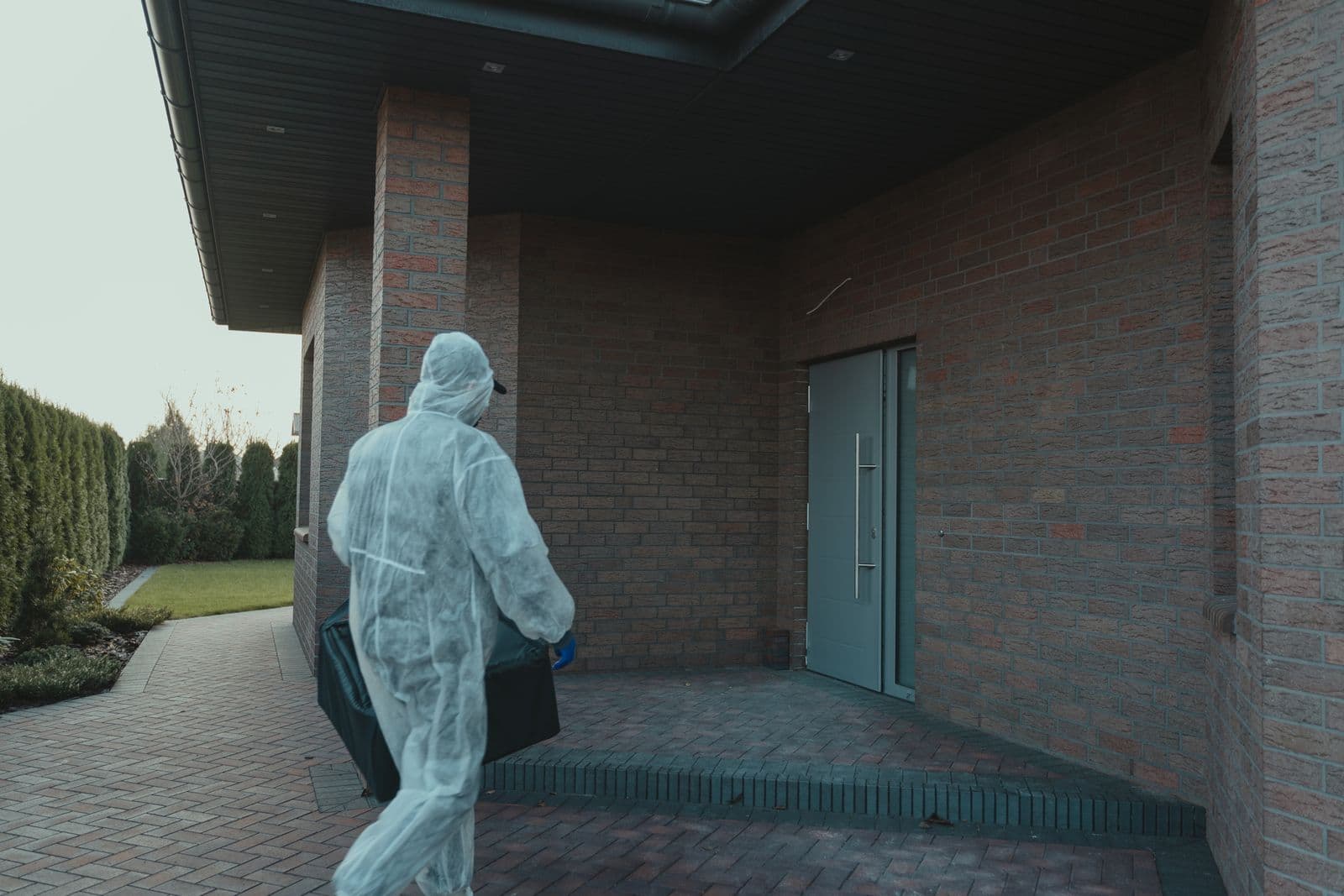
To get more pest control customers, show up in the Google map results for the pests you treat, answer the questions a careful homeowner asks before hiring, and offer every one-time customer a recurring plan before you leave the property. Then add one or two steady referral sources, like real estate agents who need termite reports. Paid leads and postcards come after that, for the weeks when your route has gaps.
Most advice on this topic is written by software companies and reads like a list of 25 "strategies." This one is shorter, and it starts with how people actually pick a pest company.
How a homeowner picks a pest control company
Somebody lifts a box in the garage and finds droppings. They search on their phone, look at three or four companies on the map, read a few reviews, and call one or two.
What are they checking while they do that? You don't have to guess. The EPA publishes a page called "Tips for Selecting a Pest Control Service," and it tells homeowners what to ask. A cautious buyer (the kind who signs up for a plan and stays for years) is working from some version of this list:
| What the EPA tells homeowners to do | What that means for you |
|---|---|
| Get several estimates, and don't choose on cost alone | You'll be compared. Reply fast and say what's included. |
| Ask how many years the company has been at its present address | Put the year you started and your town on your profile and site. |
| Ask for a list of references | Recent reviews that name the pest do this job now. |
| Ask whether the people doing the work are certified, licensed applicators or licensed technicians | Show your license number and say who holds it. |
| Ask for a copy of the license and the labels for the pesticides to be used | Offer both before they ask. |
| Check for complaints with the state agriculture department or the Better Business Bureau | Know what's on record about you, and fix what you can. |
Honestly, most pest control marketing ignores this list and goes straight to coupons. If your Google profile, your website and the person answering your phone can each answer those six points in under a minute, you're ahead of most of the companies you're being compared with.
The same EPA page also lists things homeowners should be wary of. Several of them are sales tactics some pest companies still use, so we'll come back to that list in the door-knocking section.
Win the map results for the pests you treat
For an urgent pest problem, the map results are where the customer is won or lost. Your Google Business Profile is what shows there.
Google's help page on local ranking says results depend mainly on how well your profile matches the search, how far you are from the person searching, and how well known your business is, which takes in things like review count and links from other websites. It also says there's no way to request or pay for a better local ranking. So if a salesperson guarantees you the top map spot, that's your cue to hang up.
What Google says helps: verify the business, keep the information complete and up to date, reply to reviews, and add photos and videos.
For a pest company, "complete" has some specifics:
- List services by pest, the way people search: ant control, cockroach treatment, rodent control, bed bug treatment, wasp nest removal, mosquito treatment, termite inspection. One line that says "general pest control" matches almost nothing.
- Set your service area to the towns you really route through. Google's guidelines say a service-area business should hide its home address, and that the area shouldn't stretch much farther than about two hours of driving from where you're based.
- Use your real business name. Google's rules don't allow adding services or city names to it, and in some states your ads have to carry the name exactly as it appears on your license anyway.
- Add photos of your own trucks, techs and work: a bait station set along a fence line, an entry point sealed with copper mesh, a tech with a flashlight under a deck. Skip close-ups of roaches. Nobody wants those in their search results.
The Google Business Profile generator drafts the description and service list. The full setup, including what to do if you work from home, is in our Google Business Profile guide for contractors.
Get reviews that name the pest
A person with mice wants to read that you got rid of somebody else's mice. "Great service, very professional" doesn't tell them much.
You can't write the review for the customer, but you can ask in a way that brings the job to mind. Send the request the same day, and mention what you did: "Thanks for having us out for the yellow jackets by the deck today. If you have a minute, a review helps other neighbors find us." Google's own tips say to share a review link or QR code, so put the link in the text and print the QR code on your service slip.
The review request generator writes these messages for text and email.
Three rules to stay inside:
- Google prohibits offering free or discounted services in exchange for reviews. No "$10 off your next visit for a review."
- The FTC's Consumer Reviews and Testimonials Rule, in effect since October 21, 2024, bans fake reviews and bans incentives that are conditioned on the review being positive. A review from an employee or a family member needs a clear disclosure of the relationship.
- The FTC's Q&A on that rule says asking only your happy customers isn't specifically prohibited by the rule but could still violate the FTC Act. Ask everybody.
Reply to the reviews too, including the bad ones. Google recommends keeping replies short, polite and specific, and taking complicated complaints to a phone call. More on the whole process is in how to get more Google reviews.
Answer the phone, and reply before the other two companies do
Remember the first row of that EPA table: get several estimates. Your customer has probably contacted two or three companies. In a comparison like that, the company that picks up and gives a clear answer has a real edge, and the one that calls back the next afternoon is usually too late. (Check your own records. How many of your booked jobs came from calls you returned a day later?)
A few things that help:
- Decide who answers during route hours. If it's you, with a sprayer in one hand, it isn't working. A part-time office person or an answering service that can book an inspection will pay for itself in peak season.
- Set up a text-back for missed calls: "Sorry we missed you. What pest are you seeing, and what's the address? We'll call you back within the hour."
- Have a short script for the three questions every caller asks: how soon, how much, and is it a contract.
For example, on a mouse call: "We can be there Thursday morning. The first visit is an inspection and setup, and it's $X. Most houses need one or two follow-ups, and I'll tell you on Thursday which one yours is. There's no contract for that. If you want us to keep an eye on it through the winter, I'll show you the plan then."
When you send a written quote for bigger work like termites, bed bugs or exclusion, the quote email generator lays it out so the customer can compare it properly. If your quotes tend to go quiet, read why quotes go unanswered.
Turn one-time jobs into recurring plans
New customers are expensive. A customer on a quarterly plan is someone you don't have to find again next spring, which is why getting more customers and keeping them are really the same job in this trade.
The moment to offer the plan is at the end of the first visit, standing at the door with the service slip, when the customer has just watched you find the entry point they'd missed for a year.
Be careful about how you describe the plan, though. The EPA's page tells homeowners that routine pesticide applications around the home generally aren't a good idea unless there's a constant infestation, and that a homeowner service contract should include periodic inspections, with pesticides applied only when pests are present and can't be controlled other ways. A customer who has read that will be put off by "we spray every quarter no matter what."
So sell the plan as what a good one is: scheduled inspections, monitoring, exclusion work, treatment where you find activity, and free callbacks between visits. Something like:
"We come four times a year. Each visit we check the bait stations, the garage, the attic hatch and the outside of the foundation, and we treat where we find activity. If you see anything between visits, we come back at no charge."
Then make the offer plain. One price per visit, when it's billed, how to cancel. If you sell plans online, auto-renewal laws apply. Our pest control website guide covers those and the cancellation wording.
For example (made-up numbers, use your own): if you do 40 one-time jobs a month and one in four customers takes a $120 quarterly plan, that's 10 new plan customers a month. After a year that's 120 households and about $57,600 a year in booked work, before you've spent anything on ads.
Go back to the customers you already have
Somewhere in your invoices are a few hundred people who called once about wasps or ants and never heard from you again. They already know you. Most of them will have another pest problem within a year or two, and whether they call you depends mostly on whether they remember your name.
Three messages worth sending:
- A seasonal note before the pests your area gets. Ants and termite swarmers in spring, mosquitoes and wasps before summer, rodents when the nights turn cold. Your own call log from last year tells you the right weeks.
- A follow-up two weeks after any one-time job: "Seeing anything since we were out?" It catches problems before they turn into bad reviews, and it's an easy opening for the plan.
- A once-a-year check-in to past customers who didn't take a plan, with the plan price in it.
The follow-up sequence generator drafts these. Only text or email people who gave you their details for that, and take anyone off the list as soon as they ask.
Referrals belong here too. Ask at the door: "If your neighbor's dealing with the same thing, I'm happy to take a look while I'm on the street." Pests rarely stop at a property line, and neighbors know it.
Real estate agents and termite reports
If you do termite work, agents and loan officers can send you steady business that doesn't depend on ads at all.
The reason is the paperwork. The Department of Veterans Affairs requires wood destroying insect information on its home loans across whole states, including Texas, Florida, Georgia, California, Arizona, Tennessee, Virginia and both Carolinas, plus specific counties in eight more states (Colorado, Iowa, Nebraska, Nevada, New York, Pennsylvania, Utah and Wisconsin). The VA's local requirements page has the full list.
The usual report is the NPMA-33 form, which states on its face that it's approved for FHA and VA loans. It also says the report isn't valid for a mortgage or property transfer if it isn't used within 90 days of the inspection date. So agents need the inspection done at the right point in the sale, and they need the report back quickly. (Some states use their own form. Use whichever yours requires.)
What agents want from you is simple, and most of it is speed:
- An inspection within a day or two of the call
- The report the same day or the next morning, sent to the agent and whoever else needs it
- A flat price they can tell their client without calling you
- A straight answer and a treatment quote if you find activity
Pick ten agents who list homes in your area. Send each a short email with your inspection price, your turnaround, a sample report and your cell number. Then be as fast as you said you'd be on the first job, because that's the one they judge you on.
Property managers work the same way. One manager with 60 rental units is worth more than a month of ads, and what they want is a single contact, quick response to tenant complaints and clean paperwork.
Door knocking: the federal rule, and the EPA warning
Plenty of pest companies grow by knocking on doors in summer. It can work. But you should know two things before you send anyone out.
First, the FTC's Cooling-Off Rule covers sales of $25 or more made at the buyer's home. Under it the customer can cancel until midnight of the third business day after the sale, and Saturdays count as business days. At the time of sale the seller has to:
- Tell the customer out loud about the right to cancel
- Hand over two copies of a cancellation form with the seller's name and address, the date and the cancellation deadline filled in
- Give a dated contract or receipt, in the same language the sales pitch was given in, with the cancellation statement near the signature line
If the customer cancels, the rule gives you 10 business days to refund what they paid. There are exceptions (the FTC lists emergencies, and cases where the customer asked you to come out for repair or maintenance), but a signed plan sold cold at the door is squarely covered. Many states and towns add their own rules and solicitor permits, so check locally.
Second, look at what the EPA tells homeowners to be wary of. Its list includes companies that sell door-to-door, that offer a special price for immediate treatment, that show up unannounced with bugs said to come from a neighbor's house, that offer a discount because they have material left over from another job, and that claim to be endorsed by the EPA or a state agency.
That list tells you how a door pitch has to sound if you don't want to match it. Wear ID and carry your license. Leave a written price that's good for a week or more, so nobody's rushed. Don't claim an infestation you haven't seen. Skip "we're treating your neighbor today so I can give you a deal," even when it's true, because it's word for word what the customer has been warned about.
Not legal advice. Rules change, check with your licensing board.
Paid leads and postcards, for the gaps in your route
Once the free channels are working, paid ones can fill specific holes.
Google Local Services Ads. These are the listings at the very top of search with a call button, and you pay per lead instead of per click. Google's help pages say you're charged only for valid leads, and that a missed call during business hours can still count as one if the caller stays on the line more than 20 seconds. Lead prices vary by location, job type and lead type. Ranking depends on your bid and on how likely the ad is to produce a lead, which includes responsiveness, and Google states plainly that missed calls may hurt it. Your rating, review count and response time count as well.
So LSAs reward exactly the things in the sections above. Fix reviews and phone coverage first, or you'll pay for calls you don't book.
One thing to check now: Google has been moving Local Services Ads into Google Ads, and its help page lists pest control in the first US group, starting August 2026, with service-area businesses without a storefront following in late 2026. You still pay per valid lead. Weekly budgets become a daily average (the weekly figure divided by seven), manual maximum-per-lead bidding goes away, and old performance reports don't carry over, so download them when you get the notice. Google says it emails the account admin 14 days and 7 days ahead.
Postcards by route. USPS Every Door Direct Mail sends a card to every address on the carrier routes you choose, with no mailing list. USPS lists EDDM Retail at $0.26 per piece for flats up to 3.3 ounces, between 200 and 5,000 pieces per day per ZIP Code, with no mailing permit needed. Printing is extra.
For example: 1,500 cards to three routes is $390 in postage. Add printing, then work out how many plan signups you need for that to pay. If it's two, that's a reasonable bet. If it's twenty, it isn't. The marketing budget calculator does that math.
Choose routes where you already have customers. Your truck is on those streets anyway, and "we already look after 14 homes in Oak Ridge" is a line only you can print, as long as the number is real.
Whatever you run, watch the wording. Texas and California both treat words like "safe" and "non-toxic" as misleading in pest control advertising, and that covers postcards and ads as much as websites. The details are in our pest control website guide.
Your website has to close the people all this sends
Every one of these channels ends with somebody looking you up on a phone. If what they find is a single page with a stock photo and no license number, some of them go back to the map and call the next company.
The page-by-page list is in what a pest control website needs. If you don't have a site, or yours is old, the Trade Website Bundle is a five-page site written for you, with click-to-call on every page, a quote request form, Google Business Profile setup, and Google Analytics and Search Console. It includes domain and hosting for one year, goes live within 10 days or your money back, and costs $399 one-time (was $500), with nothing monthly required. After year one, domain and hosting renew at the provider's price.
A 30-day plan
You can't do all of this at once during the season. In this order, it's about a month of evenings:
- Week one: fix the Google Business Profile. Services by pest, real service area, ten of your own photos, license number in the description.
- Week one: get your review link and QR code, and start asking every customer the same day.
- Week two: write the phone script and set up the missed-call text.
- Week two: write the plan offer on one page, with price and cancellation terms, and start offering it at the end of every job.
- Week three: pull last year's one-time customers and send the seasonal note.
- Week three: email ten real estate agents and three property managers.
- Week four: only now, test Local Services Ads or one postcard drop with a budget you can afford to lose.
- Every week: write down where each new customer came from.
That last step matters more than it looks. After three months you'll know what a booked job costs you from each source, and you can stop paying for the ones that don't earn it. The marketing plan generator turns the list into a plan with your services and towns filled in.
Quick answers
What's the fastest way to get more pest control customers?
Fix your Google Business Profile, ask every customer for a review the same day, and answer the phone live. Those three cost almost nothing and affect every other channel.
How do I get recurring pest control customers?
Offer a plan at the end of every one-time job. Describe it as inspections, monitoring and treatment where you find activity, with one clear price and a plain way to cancel.
Are Google Local Services Ads worth it for pest control?
Usually worth a test once your reviews and phone coverage are in order. You pay per valid lead, and Google says missed calls may hurt your ranking.
Is door-to-door pest control sales legal?
Generally yes, with rules. The FTC's Cooling-Off Rule gives customers three business days to cancel a sale of $25 or more made at their home, and you have to hand them the cancellation forms. States and towns add their own requirements.
How do I get termite inspection work from real estate agents?
Offer a flat price, an inspection within a day or two, and the report back the same or next day. The NPMA-33 form says a report is only good for a loan or sale if it's used within 90 days of the inspection.
Can I offer a discount for a Google review?
No. Google prohibits discounts or free services in exchange for reviews, and the FTC bans incentives tied to a positive review.
Start with last year's invoices
Before you spend a dollar on ads, count the one-time customers from the past twelve months who were never offered a plan. Call or text the first twenty this week. More tools for the trade are on the pest control hub.